
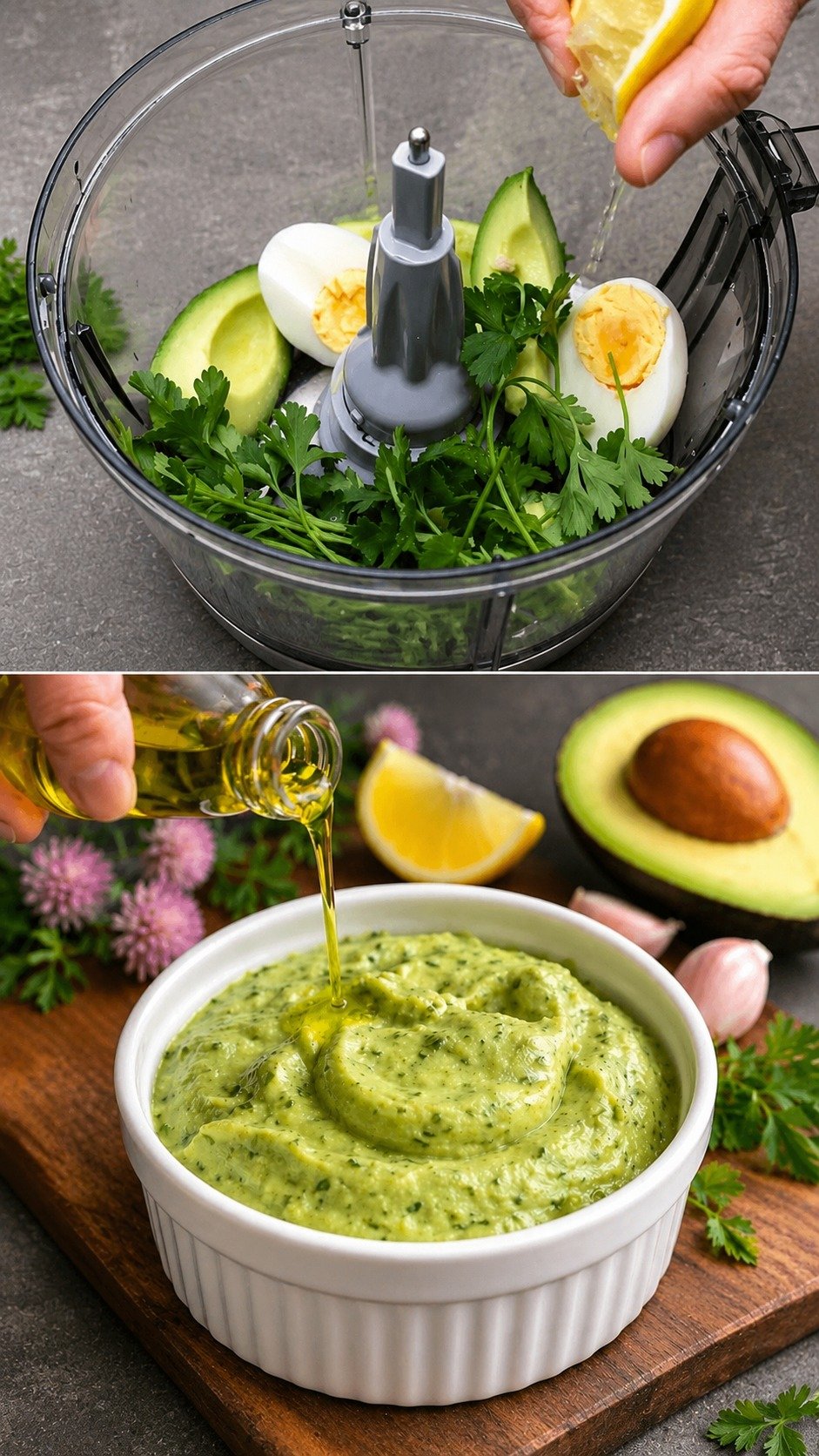
Creamy avocado mayo is the kind of quick sauce that quietly makes everything better. It’s cool, silky, lemony, and rich without feeling heavy, with the fresh green color that makes a simple sandwich, wrap, toast, or snack plate look instantly more inviting.
This version uses ripe avocado, a hard-boiled egg, lemon juice, olive oil, fresh herbs, and a pinch of salt. That means you get a thick, spreadable texture without raw egg, complicated steps, or a long list of ingredients.
The best part is how flexible it is. Use it as a sandwich spread, a dip for crunchy vegetables, a sauce for grilled chicken, a topping for eggs, or a creamy layer in meal prep bowls. The small detail that makes it taste bright instead of flat comes later, and it’s worth catching before you blend.
Why You’ll Love This Recipe
This creamy avocado mayo is fast, fresh, and surprisingly useful. It takes about 10 minutes from start to finish, and most of that time is just peeling the egg, cutting the avocado, and blending everything smooth.
It has the richness you want from a mayo-style spread, but the avocado gives it a softer, fresher flavor. The lemon keeps it bright, the olive oil helps the texture turn glossy, and the hard-boiled egg adds body so it feels more satisfying than plain mashed avocado.
You’ll love it because it works in real-life meals. Spread it on turkey sandwiches, spoon it over salmon bowls, tuck it into chicken wraps, or serve it with crackers and sliced cucumbers when you need a quick snack that feels a little more put together.
It’s also easy to adjust. Want it tangier? Add more lemon. Want it thinner for drizzling? Add a splash of cold water. Want it bolder? Add garlic, chives, basil, or a pinch of chili flakes.
Before You Start
The main thing to know is that avocado mayo depends on two ingredients being just right: the avocado and the acid.
Your avocado should be ripe but not brown. When you press it gently near the stem, it should give slightly without feeling mushy. If the avocado is too firm, the sauce may taste grassy and won’t blend as smoothly. If it’s overripe, the flavor can turn dull or bitter.
The lemon juice matters more than it seems. It does three jobs at once: brightens the flavor, balances the richness, and helps slow browning. Add some at the beginning, then taste again at the end. That final adjustment is what makes the sauce pop.
One more tip before blending: use a food processor, small blender, or immersion blender cup if you want a creamy, mayo-like texture. A fork works for a rustic spread, but blending gives you that silky finish.
Ingredients You’ll Need
For the avocado mayo:
- 1 ripe avocado, peeled and pitted
- 1 hard-boiled egg, peeled
- 1 to 2 tablespoons fresh lemon juice
- 1 tablespoon olive oil
- 1 tablespoon chopped fresh parsley, basil, or chives
- 1/4 teaspoon fine salt, plus more to taste
- 1 to 3 tablespoons cold water, as needed
- Black pepper, optional
Optional add-ins:
- 1 small garlic clove or 1/4 teaspoon garlic powder
- 1 teaspoon Dijon mustard
- Pinch of smoked paprika
- Pinch of red pepper flakes
- Extra herbs for a greener flavor
Ingredient Notes and Swaps
Use a ripe Hass avocado if possible. It blends into the creamiest texture and gives the sauce a rich, buttery taste. Large avocados can vary, so taste as you go and adjust the lemon and salt.
The hard-boiled egg gives this avocado mayo its thicker, more spreadable body. It makes the sauce feel closer to classic mayonnaise without needing raw egg. For the smoothest result, use an egg that is fully cooked and cooled.
Fresh lemon juice is best. Bottled lemon juice can taste flat or sharp, while fresh lemon gives the sauce a clean, bright finish. Lime juice also works if you want a slightly more zesty flavor.
Olive oil adds smoothness and helps the ingredients blend. You only need a small amount. A mild olive oil works best so it doesn’t overpower the avocado.
Fresh herbs make the sauce taste alive. Parsley keeps it clean and simple, basil makes it more summery, and chives add a mild onion flavor that works beautifully on sandwiches and eggs.
Garlic is optional but delicious. A little goes a long way because this sauce is not cooked. For a milder garlic flavor, use garlic powder instead of fresh garlic.
Is This Recipe Healthy?
This avocado mayo can fit into a balanced meal, especially when you use it as a flavorful spread instead of relying on heavier sauces. Avocado brings creamy texture and plant-based fats, while the egg adds a little protein and structure.
It’s naturally low in added sugar and can work well with many meal styles. Serve it with vegetables, lean proteins, whole grain toast, rice bowls, lettuce wraps, or grilled chicken for a simple, satisfying plate.
For a lighter portion, use a thin layer as a spread or thin it with water and lemon juice to make a drizzle. For a lower-carb option, pair it with lettuce wraps, grilled shrimp, chicken, eggs, or raw vegetables instead of bread or crackers.
For dairy-free meals, this recipe already works because it does not need yogurt, sour cream, or cheese. For gluten-free meals, serve it with gluten-free bread, rice bowls, potatoes, corn tortillas, or fresh vegetables.
Kitchen Tools That Help
You don’t need much equipment, but the right tool makes the texture better.
A small food processor is ideal because it blends the avocado and egg evenly without needing a large batch. A high-speed blender also works, though you may need to stop and scrape the sides.
An immersion blender with a narrow cup is another great option. It pulls the ingredients down and creates a smooth, creamy sauce quickly.
You’ll also want a sharp knife, cutting board, measuring spoons, citrus juicer, small spatula, and an airtight storage container. If you plan to meal prep, shallow containers help reduce air exposure and slow browning.
Step-by-Step Instructions
Start by preparing the avocado. Cut it in half lengthwise, twist it open, remove the pit, and scoop the flesh into a small food processor or blender cup. Check the flesh as you scoop. It should be green and creamy, with no dark stringy patches.
Add the peeled hard-boiled egg. Cut it in half first so it blends more evenly. This helps the yolk disappear into the sauce instead of leaving tiny yellow pieces behind.
Add 1 tablespoon of lemon juice, olive oil, herbs, salt, and any optional garlic or mustard. Start with less lemon because you can always add more after blending.
Blend until the mixture starts to turn creamy. Stop once or twice to scrape down the sides. At first, it may look thick and uneven, but after a few more seconds, it should become smooth, glossy, and pale green.
If the sauce is too thick, add cold water 1 tablespoon at a time. Blend after each addition. For a sandwich spread, keep it thick. For a bowl sauce or salad drizzle, thin it until it slowly falls from a spoon.
Taste before serving. This is the moment where the flavor changes. Add more lemon if it tastes too rich, more salt if it tastes flat, or more herbs if you want it fresher.
Spoon the avocado mayo into a bowl and smooth the top. Use it right away for the brightest color and best flavor.
The Small Detail That Changes Everything
The small detail is adding lemon juice in two stages.
Most people add all the lemon at once, blend, and stop there. The problem is that avocados vary. Some are buttery and mild, while others taste stronger or slightly earthy. If you add too little acid, the sauce tastes heavy. If you add too much at the beginning, it can turn sharp.
Start with 1 tablespoon of lemon juice, blend the sauce, then taste it. After the avocado, egg, oil, and herbs are fully combined, you’ll know exactly what the sauce needs.
That final squeeze of lemon wakes everything up. It makes the avocado taste fresher, balances the egg, and gives the sauce a clean finish that keeps you wanting another bite.
Common Mistakes to Avoid
Using an underripe avocado is the fastest way to lose the creamy texture. If the avocado is firm, save it for another day and use a ripe one.
Skipping the lemon makes the sauce taste flat and allows it to brown faster. Even if you prefer a mild flavor, use at least a little lemon juice.
Adding too much water at once can make the sauce loose and bland. Add it slowly, blend, then decide if you need more.
Forgetting to season after blending is another common mistake. Salt tastes different once everything is combined, so always taste at the end.
Using too much raw garlic can overpower the sauce. Start small. You can add more, but you can’t take it out.
Storing it uncovered will make the top turn brown quickly. Press plastic wrap directly against the surface or use a small airtight container.
Expecting it to last like store-bought mayo can lead to disappointment. This is a fresh avocado sauce, so it’s best enjoyed soon after making.
Easy Variations
For a high-protein version, blend in an extra hard-boiled egg white. The sauce will be thicker and slightly lighter in avocado flavor.
For a lighter drizzle, add more lemon juice and cold water until it becomes pourable. This version is great over taco bowls, grilled chicken, or roasted vegetables.
For a spicy version, add jalapeño, red pepper flakes, cayenne, or a splash of hot sauce. Start small and build the heat slowly.
For an herb-loaded version, use a mix of parsley, basil, cilantro, and chives. This tastes especially good with grilled fish, turkey wraps, and veggie sandwiches.
For a garlic mayo flavor, add roasted garlic or a small amount of garlic powder. Roasted garlic gives a sweeter, softer flavor than raw garlic.
For a low-carb meal, serve the avocado mayo with lettuce wraps, chicken salad, boiled eggs, shrimp, cucumber slices, or grilled steak bites.
For a dairy-free creamy sauce, keep the recipe as written and use it anywhere you would normally use a creamy dressing or spread.
For a meal prep bowl sauce, thin it slightly with water and lemon juice so it coats rice, quinoa, chicken, beans, or roasted vegetables without clumping.
What to Serve With It
Avocado mayo is one of those sauces that can move from breakfast to lunch to dinner without feeling out of place.
Spread it on toast and top with sliced eggs, tomato, smoked paprika, or everything seasoning. It’s creamy enough to replace butter or cream cheese when you want something fresh and savory.
Use it in sandwiches with turkey, chicken, tuna, roasted vegetables, or crispy bacon. It adds moisture without making the bread feel greasy.
Spoon it into wraps with grilled chicken, lettuce, cucumber, shredded carrots, and a squeeze of lime. The sauce holds everything together and keeps each bite flavorful.
Serve it as a dip with sliced cucumbers, bell peppers, carrots, cherry tomatoes, crackers, pita chips, or roasted potatoes.
For dinner, pair it with grilled salmon, shrimp tacos, chicken bowls, turkey burgers, baked potatoes, roasted sweet potatoes, or taco salads.
It also works beautifully with simple meal prep bowls. Add rice or quinoa, cooked protein, crunchy vegetables, and a spoonful of avocado mayo on top.
Meal Prep Tips
This avocado mayo is best made close to serving time, but you can still use it for smart meal prep.
Boil the egg ahead of time and keep it chilled. Wash and chop the herbs in advance. You can also measure the lemon juice and olive oil so the sauce comes together quickly when you need it.
For lunch prep, portion the sauce into small airtight containers. Keep it separate from bread, crackers, or lettuce until you’re ready to eat. This keeps everything fresher and prevents soggy textures.
If you’re making wraps or sandwiches, spread the avocado mayo between drier ingredients like turkey, chicken, cheese, or lettuce. Avoid placing it directly against juicy tomatoes unless you plan to eat the sandwich soon.
For dinner bowls, keep the sauce chilled and add it after reheating the warm ingredients. This protects the fresh flavor and keeps the color brighter.
How to Store and Reheat
Store avocado mayo in an airtight container in the refrigerator. For the best color and flavor, use it within 24 hours. It may still taste fine the next day, but avocado naturally darkens once exposed to air.
To slow browning, smooth the top of the sauce and press plastic wrap directly against the surface before sealing the container. A little extra lemon juice on top can also help.
Do not leave it at room temperature for long periods. Because this sauce contains egg and fresh avocado, keep it chilled until serving.
Freezing is not recommended. Avocado and egg can turn watery or grainy after thawing, and the fresh flavor will not be the same.
This sauce does not need reheating. In fact, heating it can make the flavor dull and the texture unpleasant. If you’re serving it with warm food, reheat the food first, then add the chilled avocado mayo right before eating.
Budget Tips
Avocados can be pricey, so buy them when they’re on sale and choose different ripeness levels if you’re shopping for the week. Pick one ripe avocado for today and firmer ones for later.
Use lemon juice wisely. One fresh lemon usually gives enough juice for this recipe, and the zest can be saved for salads, chicken, fish, or roasted vegetables.
Fresh parsley is usually one of the more budget-friendly herbs. If basil or chives are expensive, parsley keeps the sauce bright without raising the cost.
Stretch the sauce by turning it into a drizzle. Add cold water, extra lemon juice, and a pinch more salt. This makes it go further for grain bowls, salads, tacos, and roasted vegetables.
Serve it with affordable staples like eggs, potatoes, canned tuna, chicken thighs, rice bowls, beans, or homemade wraps. A spoonful can make simple groceries feel more exciting.
Nutrition-Friendly Swaps
For more protein, add an extra egg white or serve the sauce with chicken, tuna, salmon, shrimp, turkey, beans, or eggs.
For more vegetables, use the avocado mayo as a dip for raw veggies or spoon it over roasted broccoli, cauliflower, zucchini, or sweet potatoes.
For a lower-carb meal, skip the bread and serve it in lettuce wraps, cucumber boats, egg salad cups, or grilled chicken bowls.
For a gluten-free option, pair it with gluten-free toast, corn tortillas, rice bowls, potatoes, or vegetables.
For a lower-sodium version, start with less salt and build flavor with lemon juice, herbs, garlic powder, black pepper, or smoked paprika.
For a lighter texture, thin the sauce with cold water instead of adding more oil. It will still be creamy, but it will feel fresher and easier to drizzle.
For a heartier meal, spread it on whole grain toast or serve it with brown rice, quinoa, roasted potatoes, or beans.
Frequently Asked Questions
Can I make avocado mayo ahead of time?
Yes, but it’s best made the same day you plan to serve it. If making it ahead, store it in an airtight container with plastic wrap pressed directly onto the surface.
How long does it last in the fridge?
For the freshest color and flavor, use it within 24 hours. Avocado naturally browns over time, even with lemon juice.
Can I freeze avocado mayo?
Freezing is not recommended. The avocado and egg can become watery or grainy after thawing.
Can I make it without egg?
Yes. Leave out the egg and add a little more avocado or a spoonful of plain Greek yogurt if you eat dairy. The texture will be different but still creamy.
Can I make it dairy-free?
Yes. This recipe is naturally dairy-free as written.
Can I make it gluten-free?
Yes. The avocado mayo itself is gluten-free when made with simple whole ingredients. Serve it with gluten-free bread, rice bowls, vegetables, or corn tortillas.
How do I keep it from turning brown?
Use fresh lemon juice, store it airtight, and press plastic wrap directly against the surface. A thin layer of lemon juice on top can help slow browning.
What can I use instead of lemon juice?
Lime juice works well and gives the sauce a slightly brighter, more taco-friendly flavor. White wine vinegar can work in a pinch, but use less because it tastes sharper.
Can I use this like regular mayonnaise?
Yes, use it as a spread, dip, or creamy topping. Just remember it has a fresher avocado flavor and a shorter storage life than store-bought mayo.
Can I double the recipe?
Yes. Double all ingredients and blend in a food processor. Taste at the end because larger avocados may need extra lemon juice or salt.
Conclusion
Creamy avocado mayo is simple, fresh, and useful in more ways than you expect. With one ripe avocado, a hard-boiled egg, lemon juice, olive oil, and herbs, you get a smooth green spread that can turn sandwiches, bowls, wraps, vegetables, and quick snacks into something brighter and more satisfying.
Once you learn the small lemon adjustment at the end, this avocado mayo becomes easy to make from memory. Keep it thick for spreading, thin it for drizzling, and use it whenever a meal needs something creamy, tangy, and fresh.