If you’re a soldier who’s just been told you have a service remaining requirement (SRR) for a new assignment, school slot, or operational commitment and you’re not ready to extend or reenlist right now, the army dcss might be the next form landing on your desk. The army dcss, officially known as the Declination of Continued Service Statement, gives you a formal way to say no to extra time without it counting as refusing lawful orders. Understanding the army dcss early can save you headaches down the road and help you make an informed choice about your future in uniform.
The army dcss process is designed specifically for soldiers on their second or subsequent enlistment who face an SRR they simply cannot or will not meet by extending. Once you sign, it triggers a chain of career effects spelled out in AR 601-280, but it also opens the door to voluntary separation under Chapter 16 if you want out sooner. Whether you’re researching because your career counselor just mentioned it or you’re already weighing the pros and cons, knowing exactly how the army dcss works is crucial for protecting your record and planning your next move.
What Is Army DCSS and Why Does It Matter to Soldiers Today?
The army dcss stands for Declination of Continued Service Statement and serves as the official paperwork when a soldier refuses to extend or reenlist to satisfy a service remaining requirement under AR 601-280. Unlike a simple “no thanks” conversation, the army dcss on DA Form 4991 creates a permanent record that your command, retention office, and future boards will see. In today’s Army where operational commitments and manning needs drive many decisions, the army dcss gives qualified soldiers a structured exit ramp instead of forcing them into unwanted extensions.
When the army dcss enters the picture, it usually follows counseling by a career counselor (PMOS 79S) who explains every option available to meet the SRR. Soldiers initial next to each career effect they understand, then sign to acknowledge the refusal. The army dcss is not the same as declining orders — it is declining continued service beyond your current ETS to fulfill that specific requirement. Many soldiers breathe easier once they realize the army dcss protects them from being forced into extra time while still allowing honorable separation paths later.
DA Form 4991: Breaking Down the Official Declination of Continued Service Statement Document
DA Form 4991-R (now often just called DA Form 4991) is the exact form used for every army dcss. You can view the official blank version right here: DA Form 4991-R PDF. The form opens with your name, SSN, rank, unit, current ETS date, and the exact SRR months you need to add. Section A is the career counselor’s counseling block where you initial every single consequence you accept.
The consequences listed on DA Form 4991 for the army dcss are serious and non-negotiable: placement in nonpromotable status, prohibition from any reenlistment or extension, removal from any promotion standing list, a bar on Active Army reentry for at least 93 days after normal ETS (or two years if you separate early under para 16-5 AR 635-200), required HQDA grade determination for future reentry, no applications for commissioning or warrant officer programs, no centralized promotion or advanced schooling consideration, eligibility for voluntary separation under Chapter 16, and zero separation pay.
Section B is your personal acknowledgment, and Section C is the commander or first sergeant’s review confirming proper counseling. The entire army dcss package must be completed within 45 days of the EDAS transmittal date or notification. For the most accurate current version and instructions, always cross-check Army Pubs, but the core rules have stayed consistent across recent updates to AR 601-280 and DA PAM 601-280.
When Does the Army Require You to Consider or Sign a DCSS?
The army dcss becomes mandatory in the process only when a soldier on their second or later enlistment incurs an SRR (usually 12–36 months depending on the assignment or school) and chooses not to extend or reenlist. Initial-term soldiers (first enlistment of four years or less) do not sign a full army dcss; they use a simpler “First Termer Statement” instead. That distinction is important because many soldiers searching “DCCS army medical” or “DEC statement army reddit” actually mean the army dcss rules that apply after their first contract.
Common triggers for the army dcss include PCS orders to a high-demand location, attendance at a lengthy professional military education course, or any operational commitment flagged in EDAS that your current ETS cannot cover. Your career counselor will sit you down, explain the options, and if you refuse, the army dcss paperwork begins. This is all spelled out clearly in Chapter 4 and Chapter 5 of AR 601-280 and the supporting DA PAM 601-280 procedures.
Step-by-Step Process: How the Army DCSS Counseling and Signing Actually Works
The army dcss journey starts the moment your name appears on an EDAS-generated requirement that needs extra service time. A career counselor (PMOS 79S) schedules you for formal counseling. They walk through every possible way to meet the SRR — extension, reenlistment, or even a waiver request if eligible. If you still decline, they complete Section A of DA Form 4991, you initial every bullet, and then you move to Section B to acknowledge the counseling.
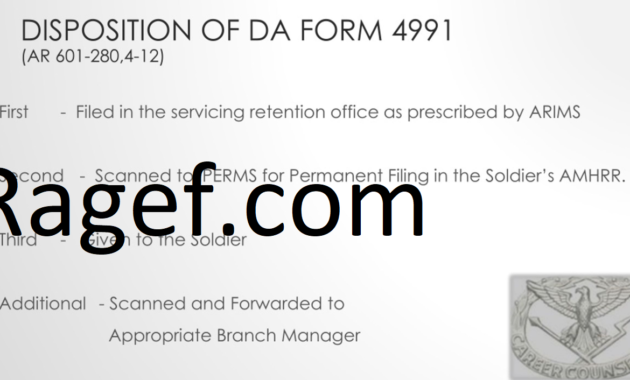
Your commander or first sergeant reviews everything in Section C within the 45-day window. The army dcss is then filed in your servicing retention office, scanned to iPERMS for your AMHRR, and a copy is given to you. From that point forward your ERB shows the appropriate flag code (often 9Q for Declination of Continued Service Statement), which automatically adjusts your DEROS to two days before ETS and blocks most favorable actions. The entire army dcss process is designed to be transparent so there are no surprises later when you try to promote, re-enlist, or apply for special programs.
Major Consequences of Signing an Army DCSS – What Soldiers Really Need to Know
Signing the army dcss immediately places you in a nonpromotable status and removes you from any promotion list. You cannot extend, reenlist, or even apply for most schools while the army dcss is active. Centralized selection boards will not consider you, and you are barred from commissioning or warrant officer programs during the current enlistment. Reentry into the Active Army is restricted — 93 days after normal ETS or a full two years if you take the early Chapter 16 route.
You also become ineligible for separation pay, and any future reentry requires a grade determination from HQDA. On the positive side, the army dcss does not automatically give you a less-than-honorable discharge; clean records almost always result in honorable characterization under Chapter 16. Many soldiers who sign the army dcss do so precisely because they want a clean break and are willing to accept the career pause in exchange for freedom from unwanted extensions. For full official details, see the form itself and the latest AR 601-280 guidance.
Army DCSS vs. Other Declination or Bar to Continued Service Options
A lot of confusion on Reddit (search “DEC statement army reddit”) comes from mixing up the army dcss with a Bar to Continued Service or a simple declination of orders. The army dcss is not a bar initiated by command — it is a soldier-initiated statement of refusal to meet an SRR. A command-initiated Bar to Continued Service under AR 601-280 is different and usually stems from performance or conduct issues. The army dcss is purely about service time refusal.
Initial-term soldiers cannot sign the full army dcss and instead use a First Termer statement that carries fewer long-term restrictions. Soldiers searching “DCCS army medical” sometimes confuse it with medical declination processes, but those fall under different regulations. The army dcss remains the specific tool for continued service refusal after your first contract.
Requesting Early Voluntary Separation After Signing Army DCSS (Chapter 16)
One of the biggest benefits of the army dcss is eligibility to request voluntary separation under paragraph 16-5 of AR 635-200 (Chapter 16). Soldiers on second or subsequent enlistments who have signed the army dcss may ask for separation no later than 90 days after pre-separation counseling. Any unfulfillable service obligation is waived, and overseas tours can be curtailed to make the timeline work. Approval is not automatic — your commander decides based on unit needs — but a clean record usually leads to honorable discharge.
The process often starts with a DA Form 4187 or informal request to command. JAG and S1 handle the Chapter packet. Real experiences shared on forums show that many soldiers who signed the army dcss successfully separated months early with full benefits intact. If you’re considering this route, talk to your career counselor and S1 early.
AR 601-280 and DA PAM 601-280: The Official Regulations Governing Every Army DCSS
AR 601-280 is the bible for the entire Army Retention Program and explicitly covers the army dcss procedures in Chapter 4 and 5. DA PAM 601-280 gives the step-by-step “how-to” for counselors, commanders, and soldiers. Both publications are updated periodically, so always check the latest versions on Army Pubs. Key points include the 45-day execution window, exact SRR calculations, and the list of career effects you must acknowledge.
The regulation also explains when the army dcss can be removed (rarely, and usually only by exception through HRC’s Force Alignment Division) and how it interacts with other retention actions. Soldiers who later want to come back after normal ETS must wait the required period and may need a grade review.
Real Soldier Stories and Reddit Discussions About Signing Army DCSS
On r/army threads like “It’s not a DEC it’s a DCSS and there are rules for it” soldiers repeatedly emphasize that the army dcss is not declining orders — it is declining extra service time. Many describe using the army dcss to get deleted from unwanted orders when they physically or personally could not meet the SRR. Others share how signing the army dcss six months after orders generated still worked and led to clean separation. Common advice: read every line of DA Form 4991, understand the nonpromotable flag, and have a plan for life after the Army.
One soldier noted that after signing the army dcss their ERB flagged correctly without any negative counseling required. Another confirmed that clean records almost always equal honorable Chapter 16 discharge. These real-world accounts match the official guidance in AR 601-280 and the form itself.
What Happens to Your Promotion, Reenlistment, and Future Army Opportunities After Army DCSS?
After the army dcss is signed and processed, your promotable status disappears, any promotion list standing is removed, and you are locked out of reenlistment for the remainder of the current term. Centralized boards skip you, and special programs become unavailable. The flag code 9Q stays visible until ETS or separation. If you separate early under Chapter 16, the two-year reentry bar applies; otherwise it is only 93 days after normal ETS.
Many soldiers use the army dcss as a deliberate career-ending tool when they know they are getting out anyway. Others treat it as a temporary pause and plan to return later through the Reserve Component or after the waiting period. The army dcss does not ruin your DD-214 if your record is otherwise strong.
How to Properly Fill Out, Submit, and Track Your Army DCSS Paperwork
Filling out the army dcss is straightforward once you sit with the career counselor. They handle most of Section A. You simply initial each consequence, sign Section B (or check the box if you refuse to sign the acknowledgment — which still processes the army dcss), and your commander signs Section C. The packet then goes through retention channels, iPERMS, and your local S1.
Keep your personal copy. Track it in your iPERMS record later to make sure it appears correctly. If you ever want to request removal (possible only by exception), the process goes through HRC. For the most current filing instructions, refer to the latest DA PAM 601-280 Chapter 13.
Can You Reverse or Remove an Army DCSS You Already Signed?
Removal of the army dcss is rare and requires an exception-to-policy request to the Chief, Force Alignment Division, HRC. Soldiers who later decide they want to stay in must show compelling reasons and usually need commander support all the way up. Most requests are denied unless extraordinary circumstances exist. The regulation is clear: once executed, the army dcss stays in your record until separation or approved withdrawal.
If you signed under duress or believe counseling was improper, document everything and speak with JAG immediately. In the majority of cases, however, the army dcss is considered final.
Army DCSS and Medical or Special Circumstances – What Changes?
Soldiers searching “DCCS army medical” often wonder if medical profiles affect the army dcss. A permanent profile or pending MEB/PEB can interact with retention rules, but the army dcss itself is not a medical form. If you have medical issues that prevent you from meeting the SRR, your career counselor and medical command coordinate, and the army dcss may still be offered as an option alongside other medical separation pathways. Always involve your provider and PEBLO if medical conditions are in play.
Frequently Asked Questions About Army DCSS, DA Form 4991, and Chapter 16 Separation
What happens if you sign a declination statement army?
You accept all the career effects listed on DA Form 4991 and become eligible for Chapter 16 voluntary separation.
Is the army dcss the same as a bar to reenlistment?
No. The army dcss is soldier-initiated for SRR refusal; a bar is usually command-initiated for performance issues.
Can first-term soldiers sign an army dcss?
No — they use a First Termer statement with different rules.
Will I still get an honorable discharge after army dcss?
Yes, if your overall record is clean. Chapter 16 separations are almost always honorable.
How long after signing army dcss can I get out?
You may request separation as soon as the paperwork is processed, but command approval and the 90-day pre-separation counseling timeline apply.
Where can I read the full regulation?
AR 601-280 and DA PAM 601-280 are available on Army Pubs. The original Reddit discussion that clarified many misconceptions is still worth reading: It’s not a DEC it’s a DCSS.
What about the tripod chapter guide on voluntary separation?
It confirms that soldiers who sign DA Form 4991-R under AR 601-280 may request Chapter 16 separation with honorable discharge: Chapter 16 Guide.
Expert legal insight on early separation after army dcss
As discussed in military law Q&A forums, signing the army dcss allows the request but does not guarantee approval — command decides: JustAnswer Military Law Thread.
For more tools, forms, and transition resources, check out iyoo.shop — they have everything from career counseling guides to gear that helps soldiers prepare for life after the Army.
Planning Your Next Move After Army DCSS – Transition, Reserves, or Reentry?
Whether you sign the army dcss to separate early or simply to avoid an unwanted extension, the key is planning ahead. Use the time between signing and ETS to build your transition packet, update your resume, and explore Reserve Component options if you still want to serve part-time. The army dcss does not close every door — it simply changes the timeline on your Active Duty career.
Final Thoughts: Making an Informed Decision About the Army DCSS
The army dcss is neither a punishment nor a free pass — it is a formal, regulated tool that lets soldiers on their second or later enlistment decline additional service time while accepting clear career consequences. By understanding DA Form 4991, AR 601-280 rules, Chapter 16 options, and the real-world experiences of other soldiers, you can make the choice that best fits your goals, family needs, and long-term plans.
If you are currently facing an army dcss counseling session, read every word of the form, ask every question, and consult your JAG, S1, and trusted mentors before signing. The army dcss process exists to protect both the Army’s manning needs and the individual soldier’s right to choose their path. Use it wisely, document everything, and move forward with confidence.