




Hey there, Soldier. I’m a senior NCO with over 15 years in the US Army, and I’ve seen plenty of good troops—E-4s to E-7s like most of you—walk this exact path from Green Card holder (Green Card to US Citizenship Through Army 2026) to proud American citizen. It’s one of the smartest moves you can make while serving, and it’s a lot more straightforward than people think when you know the right steps.
This guide breaks it all down in plain language. No fluff, just real talk based on how things actually work in 2026 with USCIS, HRC, IPPS-A, and the regs that matter. Whether you’re at your first duty station, coming back from a rotation, or grinding through the motor pool, this is for you.
1. How Green Card to US Citizenship Through Army 2026 Works
Listen up: Joining the Army as a lawful permanent resident (Green Card holder) or (Green Card to US Citizenship Through Army 2026) gives you a fast-track option most civilians don’t get. Under the Immigration and Nationality Act (INA) Section 328 for peacetime service, you can apply for naturalization after one year of honorable service.
You still need your Green Card when you file, but the Army service knocks out the usual five-year residency requirement. USCIS works with the military to make this happen faster—especially for active duty folks.
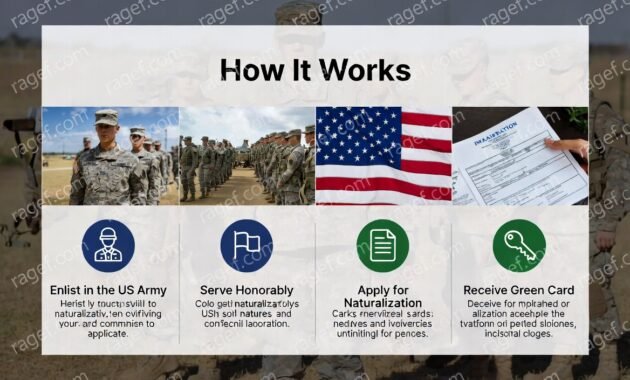
In 2026, the process is still expedited for service members. You file Form N-400 (Application for Naturalization) along with Form N-426 (Request for Certification of Military or Naval Service) while you’re in uniform. The Army certifies your service, and USCIS gives priority processing.
Key point: This isn’t automatic. You have to apply, pass the civics test (or get an exception), show good moral character, and complete the interview and oath. But compared to waiting five years as a civilian, this is a serious shortcut.
Many Soldiers I’ve mentored started the paperwork around the end of their first contract year and were citizens before their first reenlistment window closed. It opens doors for promotions, special assignments, and security clearances down the line.
2. Benefits of Green Card to US Citizenship Through Army 2026
Becoming a citizen while serving pays off big time—personally, professionally, and for your family.
- Career Advantages: As a citizen, you become eligible for more MOSs, especially those needing top-secret clearances. HRC can consider you for better assignments and schools without immigration restrictions.
- Family Benefits: Your spouse and kids get easier paths to citizenship or permanent residency. Spouses of service members can sometimes naturalize faster too.
- Voting and Full Rights: You can vote in federal elections, run for office (with some limits), and have full protection against deportation.
- Retirement and Benefits: Full citizenship strengthens your access to VA benefits, federal jobs after service, and no worries about status when you ETS.
- No More Green Card Renewal Hassles: Say goodbye to worrying about expiration or conditional status issues.
- Pride and Legacy: You served the country fully as one of its own. Many troops tell me the oath ceremony hits different after basic and AIT.

Real talk from the NCO perspective: I’ve seen E-5s get passed over for certain leadership slots or deployments until they sorted their status. Citizenship removes those roadblocks.
3. Complete Process for Green Card to US Citizenship Through Army 2026
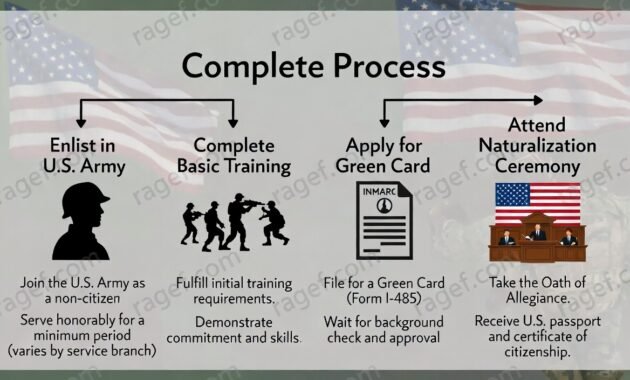
Here’s the step-by-step that actually works in today’s Army:
- Confirm Eligibility: You must be a Green Card holder, at least 18, and have (or be close to) one year of honorable service.
- Get Your N-426 Certified: Work with your chain of command and unit S-1 or legal assistance. An authorized officer (usually O-6 or higher, or your commander in some cases) certifies your service.
- Prepare and File N-400: You can file online via USCIS account or by mail. No filing fee for military applicants.
- Biometrics and Interview: USCIS schedules these. Many installations have on-post support.
- Civics/English Test: Study the 100 questions (updated 2025 test is in effect). Waivers exist for certain cases.
- Oath Ceremony: This is the big day. It can sometimes happen at your installation or overseas at an embassy.
Use IPPS-A to track your service time accurately. Keep copies of everything—LES, evaluations, training records.
Pro tip: Start gathering documents early. Don’t wait until you hit exactly 365 days. Many units have a point of contact or JAG office that helps with military naturalizations.
4. One-Year Honorable Service Rule Explained
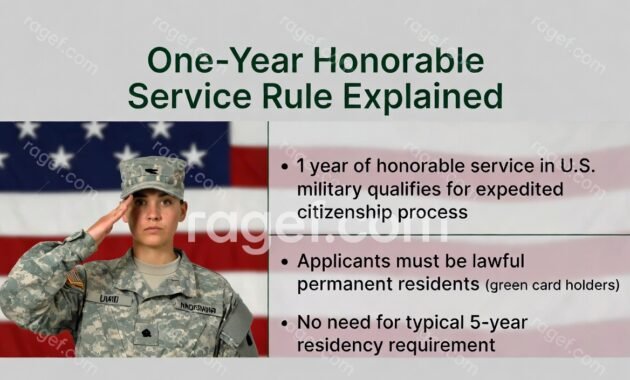
This is the big one everyone asks about. Under INA 328 (peacetime), you need at least one year of honorable service in the armed forces.
What counts as “honorable”? It means your service is characterized as honorable—no bad conduct or worse discharges. Multiple periods can add up if needed.
You can file while still serving or within six months of honorable separation. After six months out, you fall back under regular rules (five years residency).
Important 2026 note: Uncharacterized discharges after certain dates may not qualify—check the latest USCIS policy.
The clock starts from your entry date (usually ship date to basic). Use IPPS-A and your DA Form 2-1 or equivalent to verify.
Common mistake: Thinking you can apply on day 366 without proper certification. Get that N-426 right.
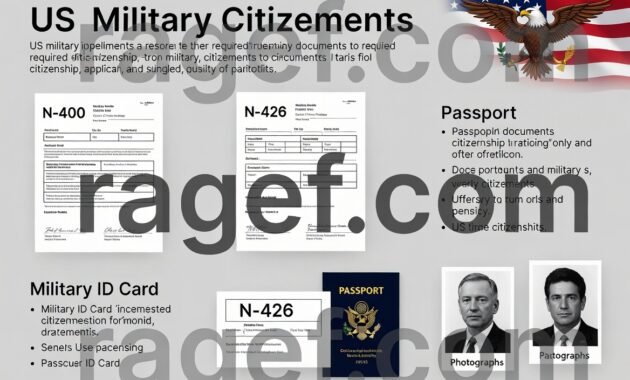
5. Required Documents (N-400, N-426 & Others)
You’ll need:
- Form N-400: The main application.
- Form N-426: Certified by the Army for current service members.
- Green Card copy (front and back).
- Two passport-style photos.
- Military ID and orders.
- Proof of honorable service (evaluations, awards, LES statements).
- Marriage/birth certificates if claiming family derivatives.
- Any court or police records if applicable.
Organize everything in a folder. Make digital scans too. Your unit legal or career counselor can review the packet.
For veterans: Use DD-214 instead of N-426.
6. Timeline from Basic Training to Citizenship Ceremony
One of the most common questions I get from E-4s and E-5s is: “How long is this actually gonna take?”
Here’s the realistic 2026 timeline for most Green Card Soldiers on active duty:
- Week 1-3 of Basic Combat Training (BCT): Your Drill Sergeants or Battalion legal usually give a naturalization brief. Start gathering documents and fill out N-400 and N-426 early. Many units push this hard in Blue Phase.
- End of BCT / Start of AIT: Get your N-426 certified by your commander (O-6 level or authorized official). Submit your packet. Some motivated troops finish biometrics while still in training.
- 3-8 Months After Submission: USCIS expedited processing for military members. In 2026, average total processing time for military N-400s is running 5-9 months from filing, depending on location and workload. Many Soldiers get their interview while at their first permanent duty station.
- Interview to Oath: Once you pass the interview (civics test + English), the Oath Ceremony can happen same day in some cases, or within 1-4 weeks. Some installations host group ceremonies.
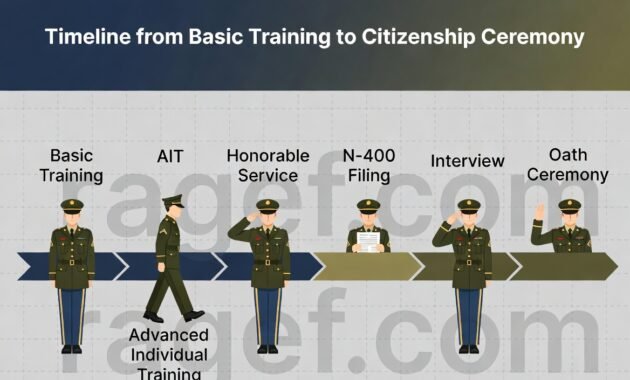
Realistic Full Timeline Example:
Ship to Basic → File at BCT/AIT → Citizenship in 6-12 months for most. I’ve seen fast cases where a Soldier became a citizen before graduating AIT. I’ve also seen cases that stretched to 14 months because of missing paperwork or high caseloads at certain field offices.
Pro Tip: Track everything in IPPS-A. Update your address immediately when you PCS. Use your USCIS online account — it’s a game changer for checking status.
Don’t sit and wait. Be proactive with your S-1 and unit JAG/legal assistance office.
7. Citizenship Benefits for Soldiers and Their Families
Becoming a citizen doesn’t just change your status — it upgrades your entire Army career and family situation.
For You (the Soldier):
- Eligibility for more MOSs and special assignments that require U.S. citizenship (especially intel, cyber, and certain aviation roles).
- Easier path to Top Secret/SCI clearances. Naturalized citizens are treated the same as native-born for clearance purposes — no automatic penalty.
- Full voting rights and ability to hold certain leadership positions without restrictions.
- Stronger VA and federal benefits after service. No future worries about immigration status affecting retirement or disability claims.
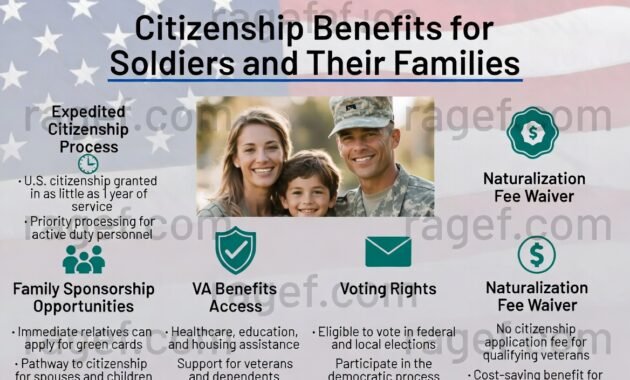
For Your Family:
- Your spouse can often apply for naturalization sooner (sometimes after only 3 years instead of 5 if married to a citizen).
- Children under 18 can derive citizenship more easily when you naturalize.
- Easier sponsorship for other family members later.
- No risk of your family facing separation issues if you deploy or get stationed overseas.
I’ve had Soldiers tell me the biggest weight lifted was knowing their kids are now fully American with zero immigration headaches. That peace of mind is worth its weight in gold.
8. Common Challenges Faced by Green Card Soldiers
This path isn’t always smooth. Here are the real hurdles I’ve seen E-4 to E-7s hit — and how to beat them:
- Paperwork Delays: Missing signatures on N-426 or outdated documents. Fix: Start early and keep digital + physical copies of everything.
- PCS Moves: Address changes mess up USCIS scheduling. Solution: Update your USCIS account the same week you get new orders.
- Civics Test Anxiety: The 2025 updated test (in effect 2026) has more questions. Study the official USCIS materials daily for 15-20 minutes.
- Unit Support Variation: Some commanders are proactive, others drag their feet. Be polite but persistent — go through legal assistance if needed.
- Deployment Conflicts: If you deploy, the process can pause. File before you leave if possible.
- Good Moral Character Issues: Old traffic tickets or minor stuff can pop up. Be honest and have explanations ready.
The biggest mistake? Waiting until “later.” The earlier you start, the fewer headaches.
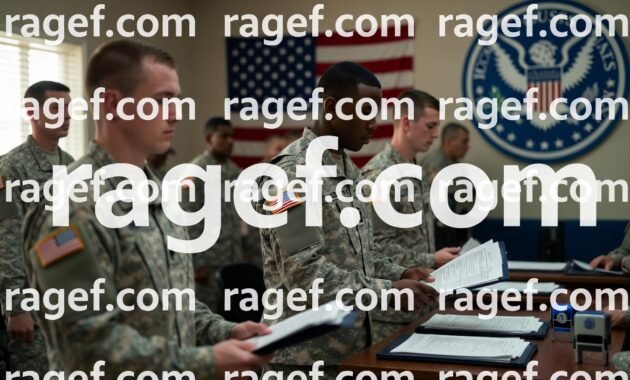
9. USCIS Expedited Processing for Military Members
USCIS gives military applicants priority — this is real expedited processing under INA Section 328. No filing fee, and they coordinate with DoD.
In 2026:
- Military cases are routed to dedicated queues.
- Many field offices have military liaisons.
- On-post naturalization events happen regularly at larger installations.
- Processing times are significantly faster than civilian applications (which can take 8-18+ months).
How to maximize this:
- File electronically if possible.
- Include a clear cover letter mentioning military service and expedited request.
- Have your chain of command reach out if delays exceed 6-8 months (rare but happens).
Contact: militaryinfo@uscis.dhs.gov or 877-CIS-4MIL for help.
10. Impact of Citizenship on Security Clearances
This is huge for career progression.
As a Green Card holder, certain clearances and schools are off-limits. Once you naturalize:
- You become fully eligible for Secret, Top Secret, and SCI clearances.
- Naturalized citizens are adjudicated the same as native-born under current guidelines. Dual citizenship (if you still have it) is not an automatic disqualifier — it’s evaluated case-by-case under the “whole person” concept.
- Having foreign family or previous ties gets scrutinized more, but strong U.S. allegiance (your Army service + naturalization oath) helps mitigate concerns.
- Many Soldiers see their clearance package approved much faster after citizenship.

Bottom line from an old NCO: Getting that blue passport often unlocks the doors to E-6/E-7 promotion boards, special ops packets, and instructor positions that were previously blocked.
11. What Happens If You Separate Before One Year

This is one of the most important realities to understand. If you ETS, get out early, or separate before completing one full year of honorable service, things change fast.
Under INA Section 328 (peacetime), you generally need that full year of honorable service. If you separate before hitting 365 days:
- You lose the military expedited path while still serving.
- You can still apply, but you’ll fall back to standard naturalization rules: 5 years as a Green Card holder with continuous residence and physical presence requirements.
- Your partial military service can count toward the residency time, but it’s not the fast track anymore.
- If you separate under honorable conditions within 6 months of filing, you might still get some benefits if you file quickly — but don’t count on it if you’re short of the year.
Key 2026 Rule: Uncharacterized discharges (common in early separation during training) are often treated strictly. USCIS may not accept them as “honorable” for the military naturalization shortcut.
What to do if this happens to you:
- File N-400 immediately before separation if you’re close.
- Get your commander to certify N-426 ASAP.
- Talk to your unit Career Counselor and JAG before any early out.
- After separation, use your DD-214 and apply as a veteran — but expect longer timelines.
Real talk: I’ve seen good Soldiers get chaptered or take an early release and kick themselves later. Plan your exit carefully if citizenship is a priority.
12. Success Stories of Soldiers Who Became Citizens
Nothing motivates like real examples from the ranks.
- SPC Ramirez (E-4, Logistics): Joined with a Green Card, filed N-400 during AIT. Got his N-426 certified at 10 months. Received citizenship at his first duty station in Germany — 8 months total. Now an E-6 with TS clearance and deploying freely.
- SSG Khan (E-6, Infantry): Came in during a high OPTEMPO period. Used the post-9/11 hostilities rule (even though mainly peacetime track). Naturalized before his first reenlistment. His whole family later benefited — wife naturalized under the 3-year spousal rule.
- SFC Morales (E-7, Maintenance): Separated once before hitting one year due to family issues. Re-enlisted, hit the mark on second contract, and became a citizen. Now mentors other Green Card Soldiers in his unit.
These aren’t cherry-picked — they’re the norm when you stay proactive. The pride on their face at the oath ceremony? Worth every bit of paperwork.
13. Peacetime vs Wartime Naturalization Rules
You need to know the difference between INA 328 and INA 329 — it can save you years.
Peacetime (INA 328):
- Requires 1 full year of honorable service.
- You must be a Green Card holder at time of naturalization interview.
- File while serving or within 6 months of honorable discharge.
- Standard civics/English test applies.
Wartime / Hostilities (INA 329):
- Only needs any period of honorable service (even 1 day) during designated hostilities.
- Post-9/11 is still designated as a period of hostilities in 2026.
- Green Card not required for eligibility.
- Much more flexible — residency and physical presence waived.
- Still need good moral character and attachment to the Constitution.
Most Army Green Card Soldiers use the peacetime track but benefit from the hostilities designation speeding things up. Check the latest USCIS policy — the post-9/11 order is still active.
Use a simple table in your notes:
| Aspect | Peacetime (328) | Hostilities (329) |
|---|---|---|
| Service Needed | 1 year | 1 day |
| Green Card Required | Yes | No |
| Filing Window | Strict (6 months) | Anytime after service |
14. Practical Tips for Smooth Naturalization Process
From an old NCO who’s helped dozens:
- Start in Week 1 of Basic — Don’t wait.
- Build a Killer Packet — Use a red folder. Include extra copies.
- Use USCIS Online Account — Track status in real time.
- Study the Civics Test Daily — 100 questions. Apps and USCIS flashcards work.
- Coordinate with S-1 and Legal — Get command support early.
- Update IPPS-A and Mailing Address religiously.
- Prepare for the Interview — Be honest about everything.
- Have a Backup Plan — Keep your Green Card valid.
Common Mistakes to Avoid:
- Waiting for “perfect timing.”
- Forgetting family documents.
- Arguing with USCIS officers — stay calm and professional.
15. What I Wish I Knew When I Started This Journey
If I could go back and talk to my younger self as an E-5 helping my first Green Card Soldier:
- Don’t overthink the civics test — it’s manageable with consistent study.
- Commanders and senior NCOs actually want to help — ask early.
- The oath ceremony feels different when you’ve worn the uniform.
- Citizenship opens doors you don’t even see yet (promotions, schools, family security).
- Paperwork seems overwhelming, but it’s just one step at a time.
- Your service already shows loyalty — the rest is just admin.
The biggest lesson: This process honors your commitment. Finish strong.
Conclusion
Brother, going from Green Card to US Citizen through the Army in 2026 is one of the best deals available. It’s not automatic, but with the right steps, it’s very achievable for motivated E-4 to E-7 Soldiers like you.
Stay honorable, stay proactive, and use your chain of command and resources. You’ve already raised your right hand once — finishing this journey makes it complete.
FAQs
Q: Can I apply before 1 year?
A: Generally no for peacetime, but check if hostilities apply.
Q: Is there a fee?
A: No filing fee for military applicants.
Q: What if I have dual citizenship?
A: US allows it; just be honest during the process.
Leave a Reply